Rusty Williams Writes Faith Into Action

A retired detective and minister turns hard-earned service into fiction that asks readers to reconsider faith.
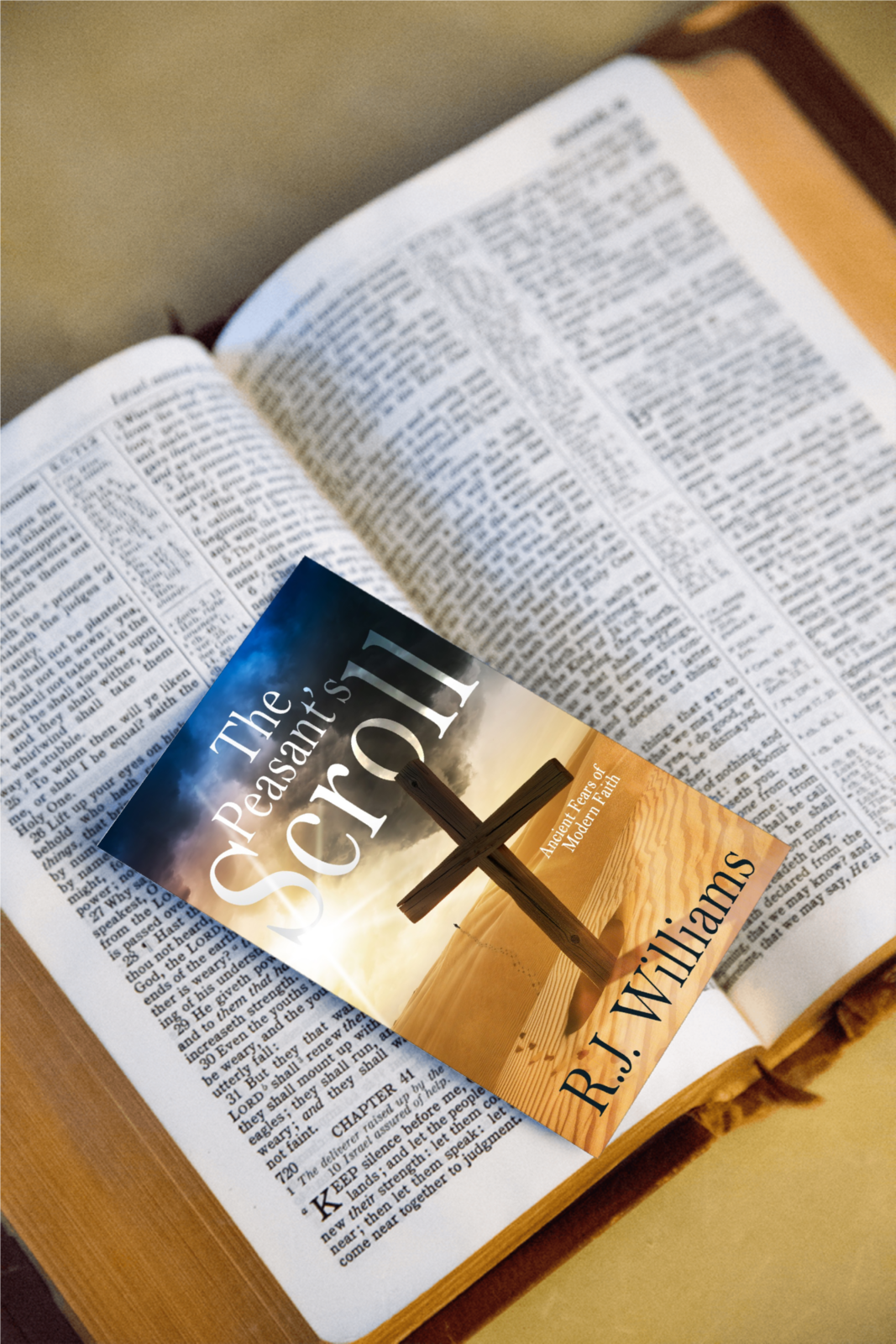
The question arrived quietly, but it did not leave quietly. After decades of emergency calls, police work, ministry, illness, and prayer, Rusty Williams found himself facing a spiritual reckoning that felt more personal than professional. He had spent his adult life serving people in crisis. Yet while writing his newest novel, he began asking whether faith had become too comfortable, too abstract, and too removed from the radical love that first moved ordinary people to “turn the world upside down.” For Rusty Williams, that question became the heartbeat of The Peasant’s Scroll: Ancient Fears of Modern Faith, a historical Christian fiction novel released this past February.
Rusty Williams And A Life Built On Service
Long before Rusty Williams became known as an author, he was shaped by scenes most people never see. He began as a volunteer EMT with his local emergency squad, later became a paramedic, and then served as a police officer and 25-year detective. Those years gave him a clear view of grief, courage, fear, regret, and the fragile line between despair and hope.
That experience now informs his writing. Williams does not approach faith from theory alone. He writes from the vantage point of someone who has sat with people during defining moments, when polished answers fail and presence matters most. His background in public safety taught him how people react under pressure. His later ordination into Christian ministry in 2008 gave him language for the deeper questions behind those reactions.
Today, Rusty Williams is a retired detective, ordained minister, police department chaplain, and author of 11 books, several of which have earned Amazon number-one Best Seller and Hot New Release recognition. He also maintains a social media ministry, The Barefoot Ministries, where his message centers on gratitude, hope, and the belief that every person deserves the chance to become their best self.
His story has also been marked by limitation. Williams lives with an orphan disease that has left him disabled. Yet disability has not ended his service. It has redirected it. He now writes, ministers, volunteers, and encourages readers to see faith not as escape from the world, but as commitment to people within it.
Rusty Williams Author Of Questions, Not Easy Answers
The unique force behind Rusty Williams as an author comes from the way he combines lived experience with theological training. His postgraduate studies include a Master of Divinity in pastoral counseling and a Doctor of Ministry in church development. Still, his work avoids the tone of a lecture. He favors a conversational style, one that invites readers to examine their lives without feeling cornered.
That approach matters because Williams is aiming at one of the most sensitive spaces in religious life: the difference between believing and doing. He observes that many Christians learn the Bible from a devotional perspective first. He has chosen to examine it through a historical and critical lens as well. That does not make his work colder. In many ways, it makes it more urgent in its humanity.
“I wrote this book to confront my own shortcomings when it comes to following Jesus or worshipping Christ,” Williams explains. “The earliest followers of Jesus would have devoted their lives to action rather than prayer. Somewhere along the way in its development, the Church focused more on prayers and beliefs.”
Williams is not attacking faith. He is asking faith to remember its feet. He returns often to the idea that Jesus called his followers to serve “the lost, the last, the lonely, and the least.” For Williams, those words are a measuring stick.
He points to Acts 17:6, where early Christians were accused of turning the world upside down. In his reading, the phrase was about visible, disruptive love. “Jesus' message was all about justice for the lost, the last, the lonely, and the least,” he notes. “In the Parable of the Sheep and the Goats, Jesus tells his disciples that their actions, not their prayers, will bring them the kingdom of God.”
Rusty Williams And The Peasant’s Scroll
Set in 1975, The Peasant’s Scroll blends two timelines into one spiritual and moral crisis. At its center is Tom McGarvey, a dying pastor forced to confront the life he has lived and the institution he has served. When he discovers an ancient manuscript unknown to the world, McGarvey faces a choice that could protect his legacy or ignite a revolution. With time running out, he must decide whether truth is worth the cost.
The second timeline carries readers back to the earliest days of the Jesus movement, through the account of a young peasant near the beginning of Christianity. In that contrast, Williams explores how a movement rooted in action, justice, sacrifice, and communal love evolved over centuries into traditions often centered on doctrine, belief, and prayer. The novel does not simply ask what changed. It asks what might change again.
The book follows Williams’s previous fiction work, Moral Fractures, released in spring 2025. While his earlier books have reached readers across categories, The Peasant’s Scroll reflects a sharpened purpose. It is designed for fans of historical Christian fiction, spiritual exploration, and stories that challenge the status quo without abandoning compassion.
Williams chose fiction because stories can reach places arguments cannot. A novel lets readers walk beside a man whose days are numbered, whose conscience is awake, and whose decision carries consequences beyond himself. Readers are not merely told to consider action. They are invited to feel the cost of inaction.
“I had to acknowledge that I have been focusing on my relationship with Christ more than following the teachings of Jesus,” Williams reflects. “It was a wake-up moment that led to a shift in my understanding of what it means, or should mean, to be a Christian.”
That honesty gives the novel its credibility. Williams is not writing from a pedestal. He is writing from confession, from service, and from the hard-earned knowledge that transformation often starts when certainty gives way to humility.
Why Rusty Williams Stands Apart Today
In a marketplace crowded with inspirational titles, Rusty Williams stands apart because his voice is grounded in contact with real human need. He has answered emergency calls. He has investigated harm. He has ministered to people seeking answers. He has lived through illness and limitation. He has preached, but his deeper instinct is to converse.
As a minister, he says he does not “preach” in the usual sense. Instead, he talks about life and how believers, nonbelievers, and everyone in between can work together for the good of others. As a writer, he resists telling readers what to think. His aim is to urge them to think.
That distinction gives his work broad appeal. Readers do not need to agree with every theological claim to recognize the moral seriousness of the question. What would change if love became a verb rather than a feeling? What would communities look like if faith was measured less by statements and more by service?
“My hope in writing this as a novel instead of a non-fiction book is for readers to consider their own lives and their understanding of how radically things can change when love is a verb instead of just a feeling,” Williams says.
For readers seeking fiction with conscience, depth, and a lived-in understanding of both pain and hope, The Peasant’s Scroll offers more than a plot. It offers a mirror. Visit Rusty Williams online to explore his books, read reviews, and discover why this novel has received such critical acclaim.
Explore More About Rusty Williams
Connect with Rusty Williams, Facebook, and Amazon Author Profile.

Artist Recap Contributor
Covers culture at large, following the moments and movements shaping the creative world.
This article features partner, contributor, or branded content from a third party. Members of the Artist Recap editorial staff were not involved in the creation of this content. All views and opinions are those of the contributor alone.