
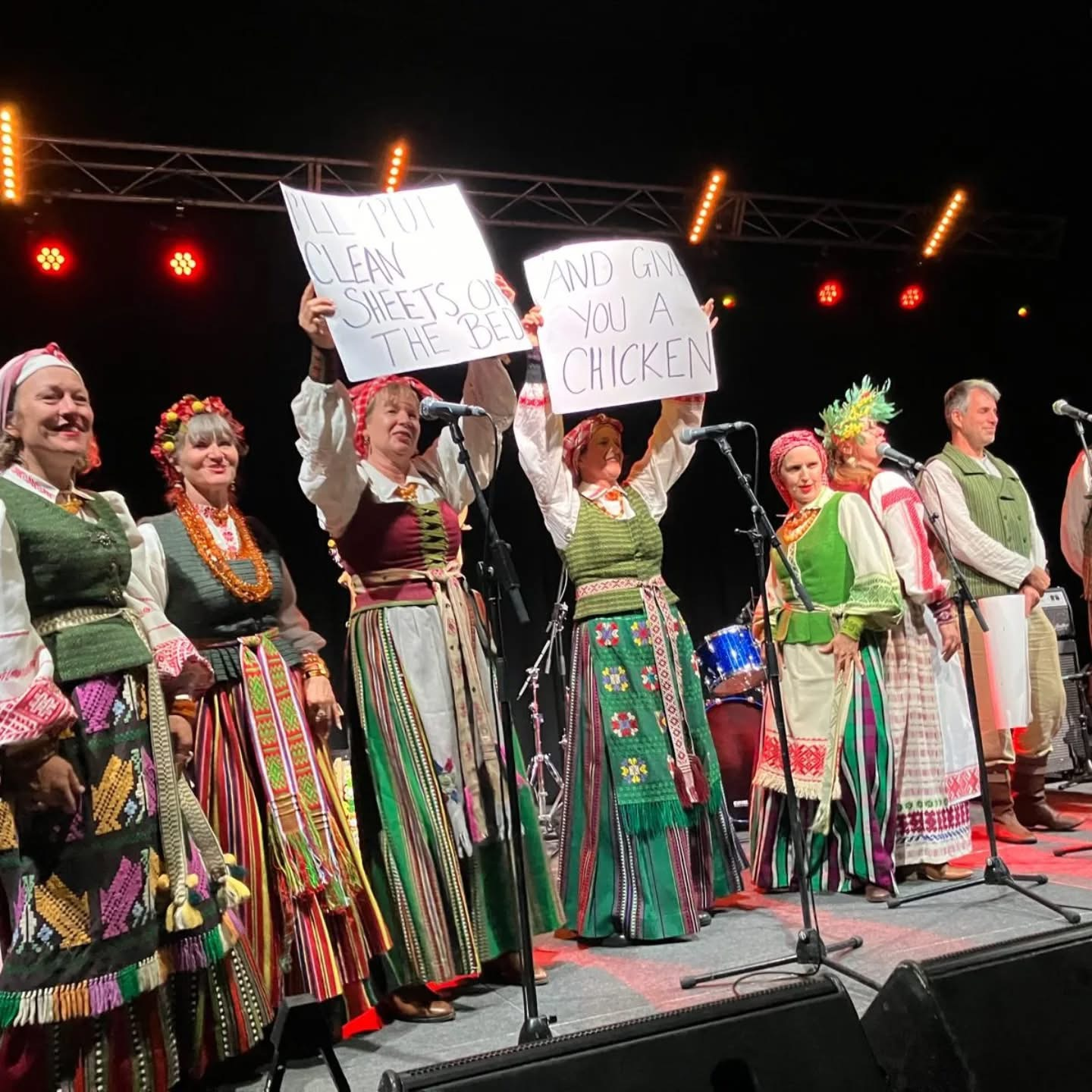
AND GIVE YOU A CHICKEN
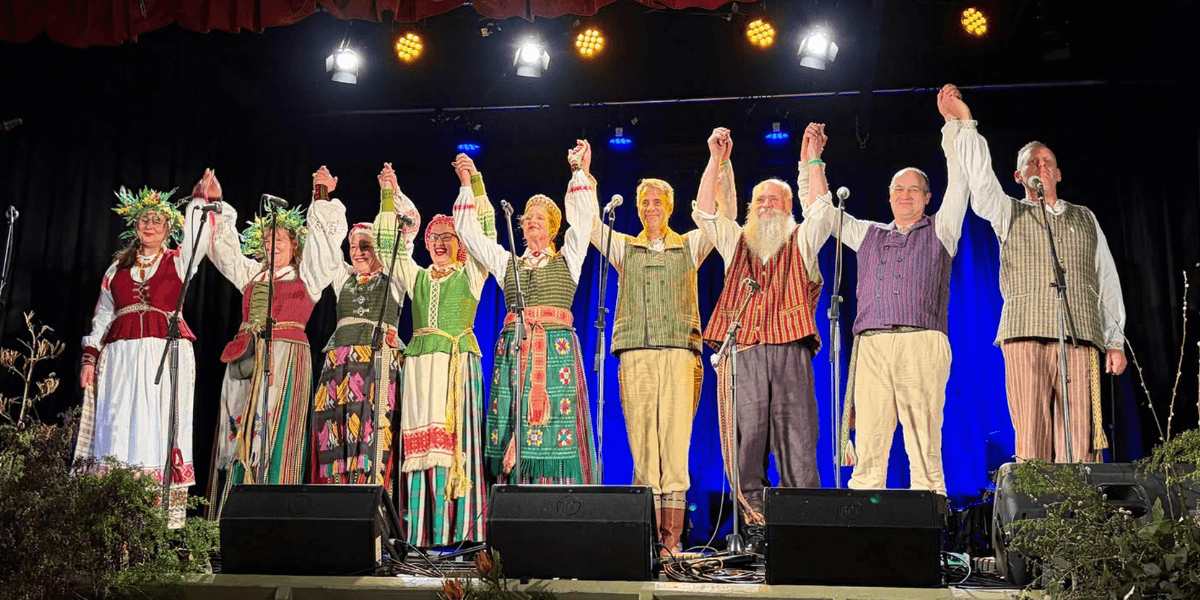
An unsettling parable contrasts wealth and moral responsibility with the enduring cultural value of Lithuanian folk traditions.
Imagine what world we would live in if King Solomon had chosen something else instead of wisdom.
God appears to Solomon in a dream and says: “What would you like me to give you?”(1 Kings 3:5). Solomon does not ask for an understanding heart to judge the people, nor for the ability to discern between good and evil. He thinks of his wife, of the household he must keep, of the respect that comes with visible power, and he answers: “I want to be very rich.”
God grants the request. Solomon becomes, in time, a porn magnate. He knows Torah. He studied in yeshiva. He was ordained. He can quote the verses that distinguish right from wrong with precision. The knowledge remains. The switch does not.
On Yom Kippur he performs the kapparot. He swings the live chicken around his head, transfers the weight of the year onto the bird, and feels, for a few moments, clean. He walks through the doors of his palace lighter than he has felt in months. The day is still holy. He opens the computer anyway.
The revenue is so large, the views so numerous, that the content has become, in his mind, almost structural—something that simply exists, like weather or taxes. Teenage boys watch while their parents argue in other rooms. Solomon does not blink. The conscience switch has calcified.
He opens the site. He nearly falls off the chair.
Someone has replaced the usual material. In its place are women—Lithuanian women—in full pagan costume, singing folk songs to live music. One video in particular feels aimed at him. The women invite a man into the house. They put clean sheets on the bed. Put wine on the table. They take off his boots. They give him a chicken.
Solomon freezes. It is Yom Kippur. He has just swung a chicken for atonement, and now pagans are singing about a chicken as if it is ordinary hospitality. He opens another browser. There the videos show witches on brooms, laughing the particular laugh of people who know something the rest of the world has forgotten.
He has never met pagans. He only knows the fear installed in him as a child by the educational path his parents chose. He does not understand how a folklore ensemble breached systems that were supposed to be secure. He only understands, eventually, that the systems are failing and that pornography has lost to folklore.
He closes the laptop. The chicken in the video is still being offered. The women are still singing. The day is still Yom Kippur.
The man in the parable is not real. The man he is drawn from is.
Solomon Friedman is an ordained rabbi and criminal defence lawyer who co-founded the private equity firm that bought MindGeek (Pornhub’s parent company) in 2023. Before the acquisition the platform had been publicly exposed for hosting child sexual abuse material and non-consensual videos; payment processors had cut ties and lawsuits followed.
Friedman had previously worked as a defence lawyer for clients accused of sexual offences and child pornography possession. An ordained rabbi now sits at the centre of industrial-scale pornography whose prior failures around consent and age verification are a matter of public record.
The hypocrisy requires no further invention.
Against that stands a different kind of work.
Pamesta Klumpė—The Lost Clog—is a Melbourne-based Lithuanian folk ensemble founded around 2010 by Australians of Lithuanian descent. The members were raised in the diaspora, learning songs, dances, and the habits of cultural transmission that immigrant communities preserve when the homeland is far away.
They perform traditional Lithuanian repertoire with their own arrangements and humour: post-Soviet pagan folk filtered through Australian lives. They have toured Lithuania, appeared at festivals including Saulės žiedas and Skamba skamba kankliai, and continue to play in Melbourne and beyond. The group has released albums, including The Sparrow Made Some Beer, and maintains an active presence through performances and community events.
They are not famous in the way industrial platforms are famous. They are hardworking people who treat inherited songs and dances as living material rather than museum pieces. They use the talents they have—voices, rhythm, craft, humour—to keep a culture audible and to offer it to anyone who will listen. That is ordinary work done with care. It does not require a compliance department or a rebrand. It simply continues.
The parable ends with pornography losing to folklore because the systems that protect the former prove permeable to the latter. The public record does not require a hack. It already shows the difference between an industry that must constantly explain its failures and a small ensemble that keeps singing the songs its members were taught.
One side sells access to bodies. The other side keeps offering the chicken, the clean sheets, the boots taken off at the door, and the songs that have outlasted more than one empire.
The Lost Clog can be found on facebook.com/thelostclog.
Wisdom was the choice Solomon was offered. Richness was the choice he took in the story. The difference is still visible.
Simona Smaidziunaite
Social Educator, B.A.
Lithuanian University of Educational Sciences

Artist Recap Contributor
Covers culture at large, following the moments and movements shaping the creative world.
This article features partner, contributor, or branded content from a third party. Members of the Artist Recap editorial staff were not involved in the creation of this content. All views and opinions are those of the contributor alone.